
No. 147Folk & Fairy
Tomte
Tomte · Nisse
The small grey guardian of the Scandinavian farm, who loves porridge with butter
In Scandinavian folklore, the tomte (Swedish) or nisse (Danish and Norwegian) is the small guardian of the farmstead. His name comes from tomt, a plot of land, so he is literally the "homestead man". Unseen, he tends the animals by night, braids the horses' manes and keeps the place in order. Some accounts make him the first farmer of the place, staying on to watch over it.
Families turn to him for the luck of a well-kept home, tomtebolycka, and a prospering farm. He asks for courtesy and a bowl of Christmas porridge with a pat of butter; tales say he turns sulky if the butter is forgotten. Leaving him porridge on Christmas night became a Christmas custom in the 1800s, and many families still set out a bowl. He belongs to folklore rather than religion.

How to recognise Tomte
- Small statureHe is child-sized or smaller, from a hand's breadth to about half an adult's height, yet tales say he is strong enough to lift a whole cow or horse.
- Old man's face and beardLook for a weathered, old face with a full grey or white beard, the mark of an elder who has watched over the place for a very long time.
- Pointed capA pointed or knitted cap, the Norwegian nisselue or Swedish luva, usually red in the best-known 19th-century cards, though grey caps also appear.
- Grey farm clothesHe wears plain grey homespun: a belted wool tunic or jacket, knee breeches and stockings, sometimes with wooden clogs, an apron or a lantern, and never a red fur-trimmed Santa suit.
- Bowl of porridge with butterA bowl of porridge with a generous pat of butter melting on top is his due, and tales say he takes offence when the butter is missing.
- Braided manesHe takes special care of horses and braids their manes at night, while badly kept horses are said to be left with tangled nisseknuter, or nisse knots.
- Barn and winter farmyardHe belongs to the barn, stable, hayloft or the space under the house, or to a snowy farmyard at night, and is seldom seen but known by his work.
Names and titles
- The Little Farm GuardianThe gårdstomte watches over the farm, its animals and its people
- Only the Tomte Is AwakeA line from Viktor Rydberg's 1881 poem 'Tomten', where the tomte is the only one awake on a midwinter night while the farm sleeps
- Butter on the PorridgeIn the old tale, a tomte is furious when his porridge has no butter, then finds it hidden underneath and feels sorry
- Friend of the HorsesHe is said to care most for the horses and to braid their manes
- Porridge or PoetryIn Hans Christian Andersen's story the nisse is torn between the grocer's Christmas porridge and the student's book of poetry
Feast days
- Lillejuleaften (Little Christmas Eve)23 December, every year
- Christmas Eve and Christmas night24 December, every year
In art and place public-domain and openly licensed images

Tomte in the shop
-
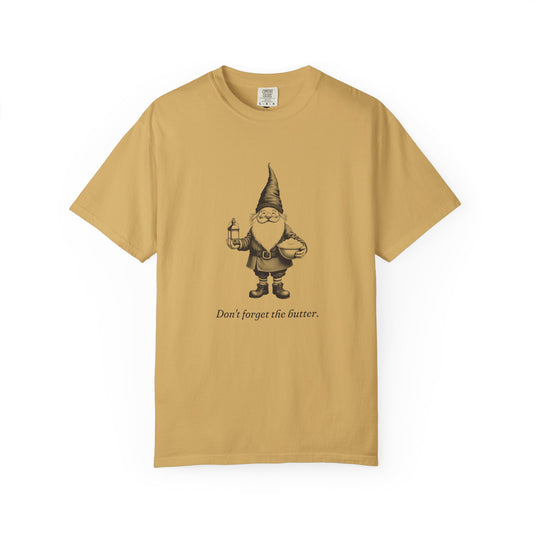
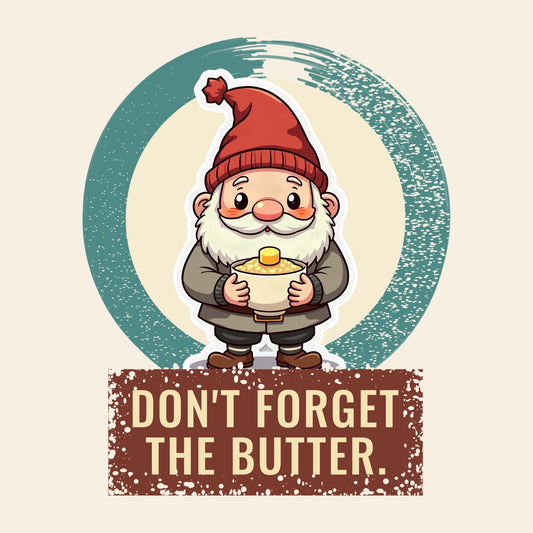
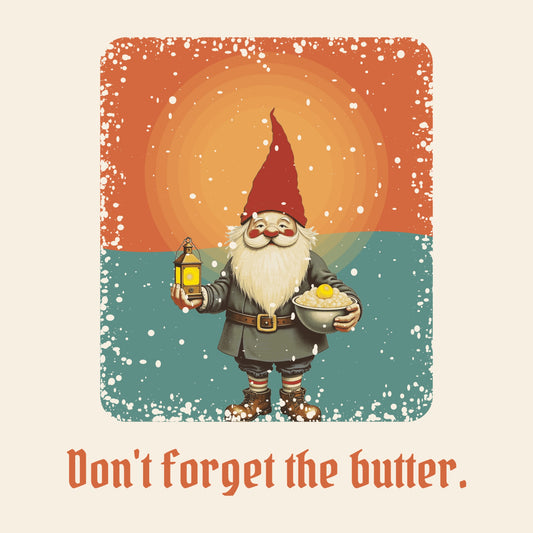
Tomte · “Don't forget the butter.” — Garment-Dyed One-Ink Tee
Regular price From $34.00 USDRegular price -
Tomte: Butter on the Porridge — Sticker
Regular price From $4.50 USDRegular price -
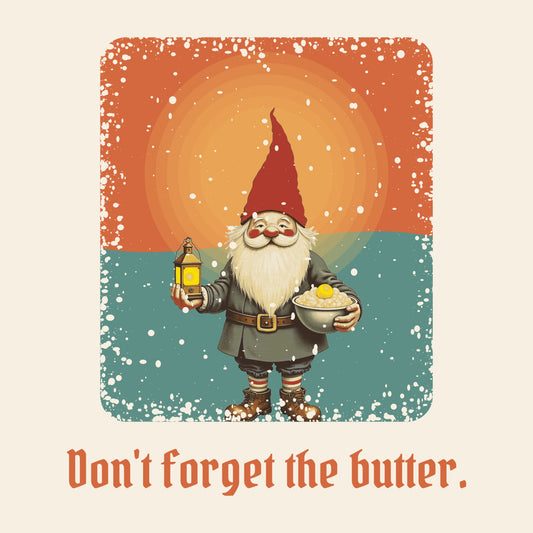
Tomte · “Don't forget the butter.” — Garment-Dyed Sweatshirt
Regular price From $52.00 USDRegular price -
Tomte · “Don't forget the butter.” — Garment-Dyed Sweatshirt
Regular price From $52.00 USDRegular price -
Tomte · “Don't forget the butter.” — Garment-Dyed T-Shirt
Regular price From $36.00 USDRegular price -
Tomte · “Don't forget the butter.” — Garment-Dyed T-Shirt
Regular price From $36.00 USDRegular price -
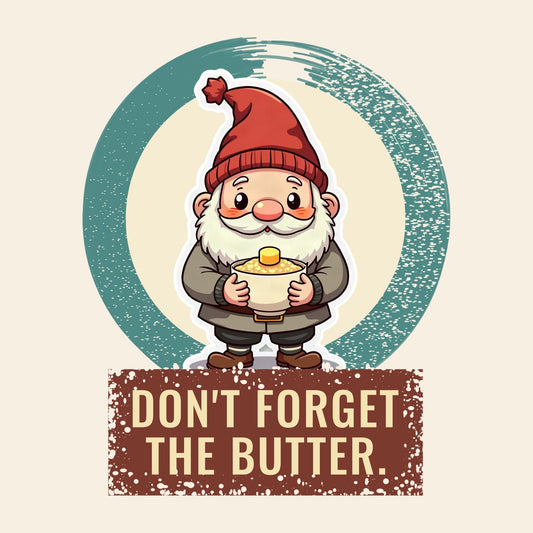
Tomte · “Don't forget the butter.” — Unisex T-Shirt
Regular price From $29.00 USDRegular price -
Tomte · “Don't forget the butter.” — Unisex T-Shirt
Regular price From $29.00 USDRegular price









Sources
- Wikipedia: Nisse (folklore)
- ISOF: Tid för tomtegröt
- ISOF: Julgröt och grötrim
- ISOF: Hur kom jultomten till Sverige?
- Kulturminnet: Nordisk folktro del 24, Gårdstomten
- Nya Dagbladet: Gårdstomten, nordiska folktrons skyddsväsen
- Europeana: Jenny Nyström, the woman who created the image for a Swedish Christmas
- The Local Sweden: How a folklore tomte became Sweden's Santa
- Nasjonalmuseet: Julenissens forunderlige historie
- Nasjonalmuseet: collection object NG.K&H.B.00714
- Wikipedia: Yule and Christmas in Denmark
- Wikipedia: Tomten (poem)
- Jamtgårdsgård blog: Julen, en tid att tacka gårdstomten för arbetet
- IGLabo: hobby site on the tomte
- Wikipedia: Jenny Nyström
- Wikipedia: Culture of Denmark
- Släkthistoria: Jenny Nyströms far inspirerade till tomten
- Wikipedia: The Goblin and the Grocer
- Ingebretsen's blog: Legend of the Nisse and Tomte
- Store norske leksikon: Theodor Kittelsen
- Kiddle: Nisse (folklore)
- Svenska högtider: Vem illustrerade Viktor Rydbergs dikt Tomten 1881
- Wikipedia: The Tomten (Astrid Lindgren)
- StudyBergen: Christmas traditions in Norway
Also in Folk & Fairy


← The Encyclopedia Spotted something to correct? Suggest a correction